Wednesday, March 15, 2006

Relationships: Sibling Rivalry

Children prefer to have their parents' love and attention all to themselves. As the baby of the family, Haaziq knows by now that Aqeelah, his sister has some of the independence and privileges he wants for himself, while Aqeelah is discovering that she does not want her little brother tagging along wherever she goes. The result: arguing, name-calling, teasing, tattling, pushing, and hitting that will occupy for hours and ultimately threaten my sanity. By now I have discovered just how much life changes when you have more that one child. It’s not just twice the amount of work, nor simply twice the amount of care and love. Juggling the demands of two very different individuals, with their particulars needs, requires skills and patience beyond the capacities of even the saintliest of parents. Nevertheless, this is a good time to teach your children the importance of treating each other respectfully and resolving their own conflicts. The more their relationship develops, the more they seem to antagonise each other but with some careful navigation and lots of understanding, you can minimize the headaches and make life at home more harmonious.

Try not to foster competition. Resist the temptation to compare your children. Instead, emphasize each child's unique strengths. Praise and reward them together whenever possible. Don’t play favorites. This favouritism can make them too competitive, and may cause distress to one child if the other is constantly held up as an example

Don't strive for equality. When parents, with the best of intentions, try to treat their children equally, they create more problems than they solve. Instead, treat your children as individuals. Being fair is very important, but it is not the same as being equal. Your children need to learn that you will do your best to meet each of their unique needs. Even if you are able to do everything totally equally, your children will still feel as if they’re not getting a fair share of attention, discipline, or responsiveness from you.

Discourage tattling. Make it clear that you won't stand for your children trying to get each other into trouble. But be sure they understand the one important exception to this rule: If anybody is in danger of getting hurt or is hurting someone, then you need to hear about it right away.

Intervene and set limits when necessary. In general, avoid getting involved in your children's arguments. Ignore small squabbles and encourage your kids to work out problems themselves. If emotions are escalating and you see fury or tears on the horizon, though, they probably need your help, if only to facilitate communication. Listen to all sides of the debate, allowing no one to interrupt the person saying his piece. Then sum up the problem, acknowledge its difficulty, and have the kids propose solutions. You might even want to leave them alone, expressing your confidence in their ability to work it out. Of course, there are times when one child will clearly be at fault. Then take him aside and lay down guidelines for future scuffles.

Acknowledge feelings. Sometimes talking about a child's feelings is all it takes to end a competitive bout. Set aside “alone time” for each child. Each parent should spend some one-on-one with each kid on a regular basis. Try to get in at least a few minutes each day. It’s amazing how much even just 10 minutes of uninterrupted one-on-one time can mean to your child.

Dole out rewards. When your kids have to spend a lot of time together — such as on a family car trip — try establishing a reward system. You might be surprised at how well your kids cooperate when they have their eyes on the prize.

Divide and conquer. Siblings tend to go through periods in which they're best friends and periods when they're sworn enemies. When your family's in battle mode, splitting up into child / parent pairs can ease the tension
It seems that no matter how well organised, patient and resourceful, there is little parents can do to completely eradicate sibling rivalry. Being aware of the fact that every child is extremely sensitive to all other relationship in the family can be very helpful for parents, because the child is not only gauging how loved and appreciated he is, but also how this measures with respect to his sibling.

Wednesday, March 08, 2006

Headache - what's normal and what's not?

I woke up this morning with a slight headache. Took a shower and had toasted bread but the headache is still there. I do not want take panadol-painkiller yet as i want it to "heal" naturally. Am trying to ignore it for long enough until it is bound to go away. We have all thought like that about a minor health problem, right? But do you sometimes wonder, at what stage your minor health problem like headache should you be concerned? What is normal and what is not? This could be your everyday symptoms with an innocent explanation, but at the same time it could be a warning sign that you do need to see your doctor.

What is normal?

  • Before a period
  • With a cold
  • After a hectic day
  • If you are constipated
  • If you are dehydrated

What is not normal?

  • Daily headaches - you may have developed a condition called chronic daily headache. The overuse of painkillers actually perpetuates the pain. Your body may develops a tolerance meaning you will need more frequent and higher doses of painkillers. Treatment involves weaning yourself off the painkillers and should be done under medical supervision.
  • Feeling sick or vomiting,seeing flashing lights, feeling tired, intolerance to light or headache lasting from 4 to 72 hours - if you have 2 or more of these symptoms, as well as intense headache usually on one side, you may have migraine.
  • Throbbing headache at the back of your head on waking - mild or moderate high blood pressure won't cause headaches, very highblood pressure can. Get your blood pressure checked.
  • Severe, sudden headache with numbness or tingling feeling in your limbs - in rare cases, this could be caused by a brain tumour, but headache won't be your only symptom. Referred to a neurologist.

Monday, March 06, 2006

Guava Goodness

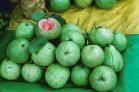
Red guava offers more antioxidant benefits than spinach, strawberries, or oranges, a recent study concluded, making red guava a free-radical-scavenging powerhouse. The phenols in red guava are responsible for the fruit's antioxidant activity. Simply peel and remove the seeds from well-ripened fruit and enjoy.

Red guavas were granted the gold medal in a comparison with other commonly consumed fruits. For instance, its high level of licopene (a carotenoid considered good for fighting free radicals and which is present in fruits with red pulp) makes red and pink guavas appropriate for cancer prevention

The roots, bark, leaves and immature fruits, because of their astringency, are commonly employed to halt gastroenteritis, diarrhea and dysentery, throughout the tropics. Crushed leaves are applied on wounds, ulcers and rheumatic places, and leaves are chewed to relieve toothache. The leaf decoction is taken as a remedy for coughs, throat and chest ailments, gargled to relieve oral ulcers and inflamed gums. It has been effective in halting vomiting and diarrhea in cholera patients. It is also applied on skin diseases.

So give yourself a tropical pick-me-up with antioxidant-rich red guava today!

Sunday, March 05, 2006

Tips & Tots: 3

Did u know..?

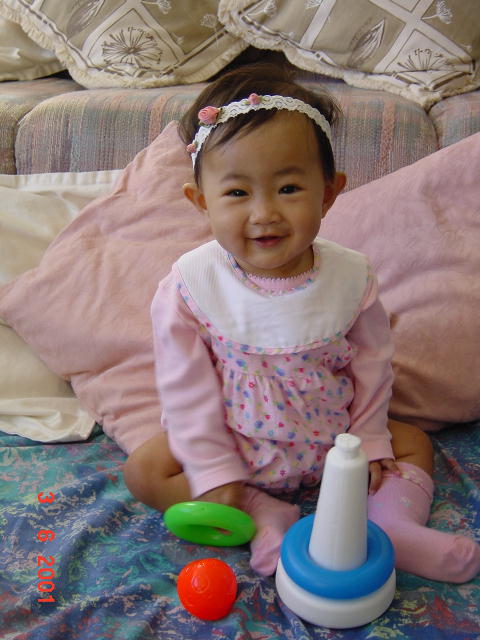
- Baby girls smile twice as often as boys in the first few weeks of life?


- A baby knows her name by six months! and 50% of 15 months old babies who are shown photographs of themselves respond by saying their names. Give it a try with your baby and see how she responds.

Friday, March 03, 2006

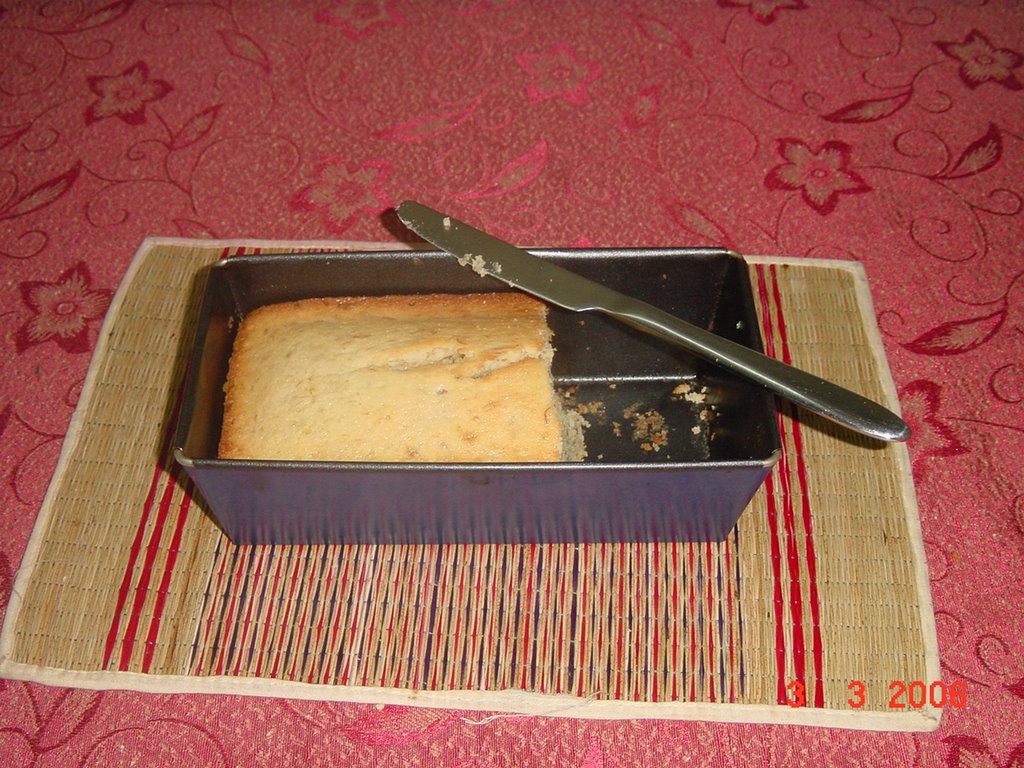
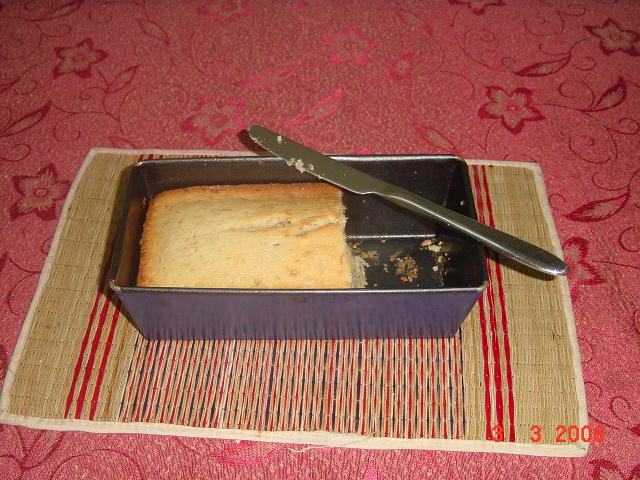
Easy Peasy Banana Cake.

I spend most of my teenager years at boarding school. Therefore you could say that i did not gain enough cooking skills from my mom. Continued my degree program at Northeastern University in Boston, where as you can imagine the foods were totally different from my mom's cooking. Here come the challanges. Am totally screwed. I had to make a long distance call to ask recipes from my mom. Luckily, i have great friends who always ready to share their knowledge in cooking. Thanks Cik Lat for your masak lemak cili padi, Elin-nasi ayam, Denn-mee rebus, Angah-puding telur, Ain-rendang, Kniza-baked salmon, Minah-spagetti meatball and many more. I couldn't have survived without you all.

Anyway, today i want to share with you an easy-peasy banana cake recipe. I got this recipe from my dearest friend, Shahida ( she actually shares a lot of recipes with me and such a good cook) Thanks a lot Ida. Since am not really good in baking, cakes especially, i was a bit hesitant to try it. Ida assured me that this is an easy-peasy recipe and nothing could go wrong. And she was right! Here are the ingredients. Give it a try and let me know how it turn out which am pretty sure will be great!

125g butter
170g castor sugar
185g flour (sifted)
125ml milk
1 1/2tsp baking powder
1 tsb vanilla essence
2 medium eggs
3 bananas (crushed)

methods: Sift flour with baking powder. Beat butter and essence vanilla until light and fluffy. Gradually add castor sugar to it. Then add in the eggs. After that mix in the dry mixture-flour. Pour in the milk until the mixture become nice and smooth. Lastly add the crushed bananas and stir slowly. Put it in the baking tin and bake it for approximately 1 hour.

Tips & Tots: 2

"When we love something it is of value to us, and when something is of value to us we spend time with it, time enjoying it and time taking care of it."
"Loving someone that doesn't love you is like reaching for a star.you know you'll never reach it, but you just got to keep trying."

Thursday, March 02, 2006

Superfoods that Heal

Most of us think we have a good idea of what constitute a healthy diet. Strange,then, that we can be so bad at eating the right food to keep us healthy end even worse at knowing what our bodies need to recover quickly from minor illness. Apart from our daily basics - 5 portions of fruits and vegs a day - we are often un aware of the extraordinary medicinal power of some everyday types of food.

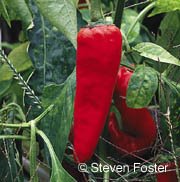
Chilli - contains capsaicin, a substance that's proved so effective at inhibiting pains signals from reaching the brain that it's used in medicines to relieve neuralgia and arthitis pain. Chillis's eye-watering properties also make it an excellent decongestant.


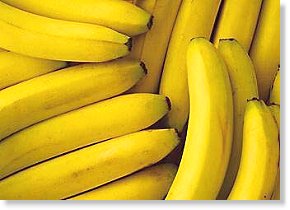
Banana - a rich source of pottasium, which plays a key role in regulating blood pressure. Researchers have found that eating bananas - at least two a day - can lower blood pressure.

Oily Fish - fatty fish like salmon, mackarel and sardines ar ethe original medicinal foods. They cointain omega-3 fatty acids that help to lower levels of blood fats called triglycerides and reduce blood clotting, both are important in protecting against heart diseases. Other potives benefits include a lower risk of having a stroke, new evidence shows that oily fish may protect against an age-related eye diseases.


Soya - the higher your cholesterol level, the more efefctive soya is in lowering it. Researchers have found that eating soya-rich foods could also reduce a woman's risk of developing breast cancer. It had been suspected that the high consumption of foods such as tofu and soya beans or milk in countries such as China and Japan contributed to the countries' low breast cancer rates.
But there had been no conclusive scientific evidence to back up the theory.

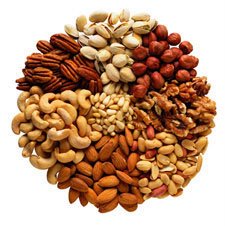
Nuts - researchers found that women who ate nuts 2-4 times a week had less than half the heart disease rates of non nut-eaters. They are high in fat and calories but nuts could even help you lose your weight.


Tea - has long been linked with a lower risk of certain cancers, and tests have revealed that a compound in green tea causes cancer cells to self-destruct. When it comes to healthy teeth and gums, tea acts to stop dental plaque to sticking to teeth and also contains compounds that can kill or suppress the bacteria taht produce acid and cause tooth cavities.

Honey - used on wound for thousands of years and can prevent bacterial growth, reduce inflammation, swelling and pain, and stimulate new tissue and blood vessel growth. Honey also effective in treating diarrhoea and gastrointestinal infections.

Garlic - has long been considered a herbal "wonder drug", with a reputation for preventing everything from the common cold and flu to the Plague. Raw garlic is used by some to treat the symptoms of acne and there is some evidence that it can assist in managing high cholestrol levels. It can even be effective as a natural mosquito repellent.